



What Is CNC Machining? An Overview of the CNC Machining Process
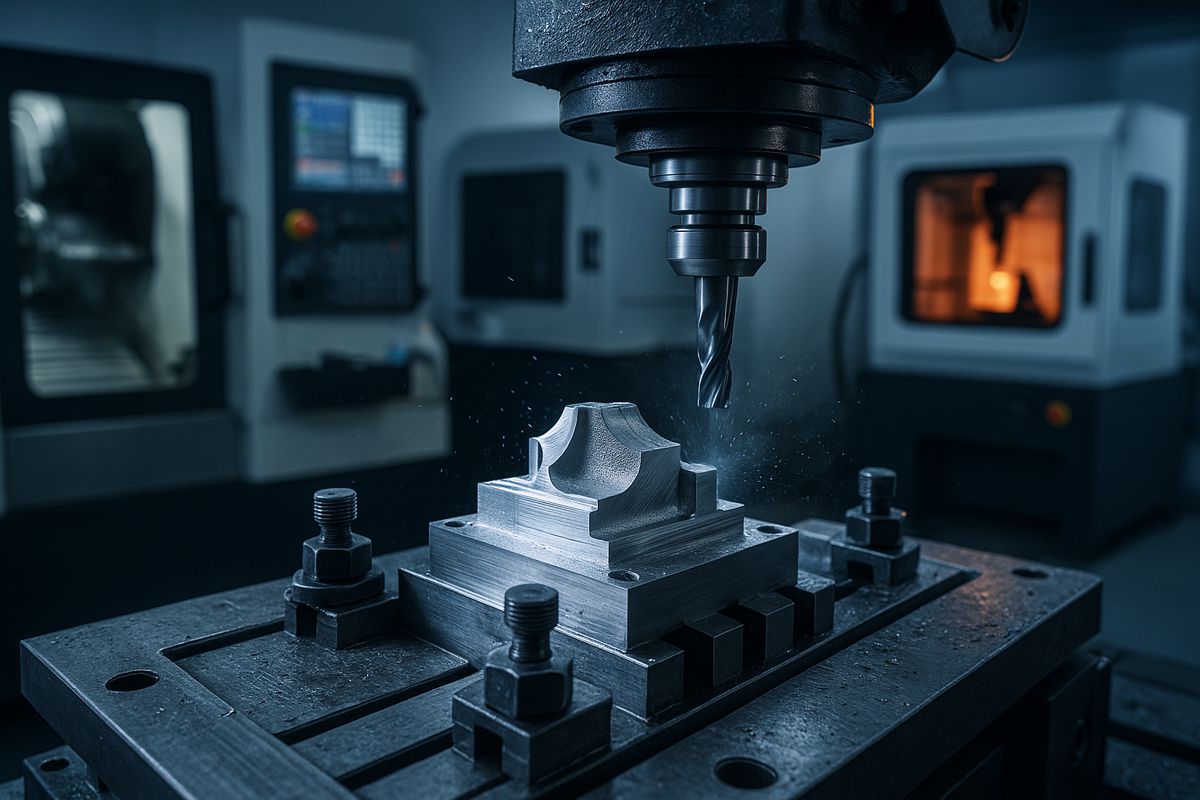
What Is CNC Machining? An Overview of the CNC Machining Process
Introduction: The Mechanics of CNC Machining
CNC (Computer Numerical Control) machining stands as a foundational element in modern manufacturing, utilizing pre-programmed software to dictate the movement of machines and factory tools. This system enables the operation of diverse equipment, from mills and lathes to grinders and routers, managing intricate three-dimensional cutting tasks with unmatched precision. By using a single set of instructions, CNC machines operate autonomously, enhancing efficiency, minimizing human error, and optimizing productivity.
Advancements Beyond Traditional Techniques
Traditional machining required operators to manually control tools using levers, buttons, and wheels. CNC machining revolutionizes this approach with computer-like systems enhanced by advanced software, designed to execute complex designs with minimal human intervention. This shift not only increases precision but also adapts seamlessly to design changes, transforming manufacturing processes across industries.
Revolutionizing Manufacturing with CNC Technology
CNC technology allows for the programming of machines to manufacture diverse components, ranging from metal automotive parts to plastic consumer goods. These systems can adjust to new instructions with ease, continually enhancing their performance. CNC technology delivers speed and accuracy that manual methods cannot match, whether for single-item production or mass manufacture. Additionally, this technology complements the injection molding process, enabling high-precision molds and components crucial for various industries.
The Art of CNC Machine Programming
CNC programming involves converting 2D or 3D CAD drawings into G-code, which directs the machines to perform detailed operations. This capability allows for repetitive, precise operations with minimal supervision, enabling operators to focus more on quality control. Trial runs prior to full-scale production help perfect the programming, reducing errors and increasing operational efficiency. Such precision is vital in CNC prototyping, where early-stage product iterations benefit from highly accurate manufacturing techniques.
Understanding Open/Closed-Loop CNC Systems
CNC machines operate using either open-loop or closed-loop systems. Open-loop systems, simpler in design, function unidirectionally and are suitable for tasks where high precision is not critical. In contrast, closed-loop systems employ servo motors and feedback mechanisms that dynamically adjust the machine’s speed and positioning, crucial for high-accuracy tasks in fields like metalworking.
Automation in CNC Machining
Modern CNC machines enhance production through automation, utilizing CAD and CAM software to specify dimensions and execute complex cuts with minimal human input. These integrated systems can also include robotic mechanisms for tasks requiring intricate assembly, ensuring consistent quality across production cycles.
Exploring Types of CNC Machines
Since their inception in the 1940s, CNC machines have expanded to include technologies such as laser cutters, plasma cutters, and even 3D printers. These machines are vital in various sectors, efficiently producing everything from aerospace components to decorative wooden pieces. They also play a key role in the life cycle of a mold, ensuring molds are created with the precision necessary to withstand repeated use.
Precision with CNC Mills and Lathes
CNC mills are adept at multi-axis operations, following detailed alphanumeric prompts to execute complex designs. CNC lathes similarly transform rotational force into precision cuts, surpassing the capabilities of manual counterparts in both speed and intricacy.
Specialized Tools in CNC: Plasma Cutters and EDMs
Plasma cutters combine high-pressure gas with electrical arcs to slice through metals with high precision, essential in sectors that demand precise, efficient cutting. Electric Discharge Machines (EDMs) use controlled electrical sparks to shape materials, ideal for producing detailed and delicate components.
Versatility of Water Jet Cutters
Water jet cutters, using high-pressure streams mixed with abrasive particles, can cut through tough materials like granite and metal without inducing heat damage, thus maintaining the integrity of the material and ensuring precision.
The Boundless Potential of CNC Machines
CNC technology supports a wide range of applications with tools such as laser cutters, 3D printers, and more, catering to industries that value precision, speed, and adaptability. These digitally driven systems enable the creation of products with intricate details and high technological value, reinforcing their indispensable role in modern manufacturing.
This innovative approach complements other advanced manufacturing processes, such as the injection molding process, and is pivotal in achieving efficiency and accuracy in product development.
